Some Complicated Angles of Weight

Although styles of therapy differ, it is widely accepted that the root of all psychological malfunction is pain. In the animal kingdom, the amoeba is about as simple a creature as can be. And yet, even the humble amoeba knows to avoid pain, and somehow recognizes the appropriate moment to flee from a molecule of poison.

In that respect, people are very much like amoebae, but have more freedom of choice in their reactions. Amoebae probably can’t even fight. Their choice of displacement activity is quite limited.

Now, what about the entities that facilitate the healing of pain? Psychologists, for instance — do they absolutely need to be human?

As we have discussed, one aspect of psychological therapy has developed quite rapidly and noticeably into an overwhelming issue. Can excellent results be achieved with less, or even zero, human interaction? Can human connection be adapted and reconceptualized into something equally curative, by perfecting the ability of Artificial Intellligence to imitate high-quality connection?

It’s not that surprising

One might ask, why shouldn’t this be the case? Look, for instance, at books. They are made from common materials, and from symbols that are very different from human speech or breath. Furthermore, vast numbers of humans have been and still are unable to read books — and yet the influence that books have exerted on many of us (for better or worse) throughout the ages is a true marvel.

An important aspect of convincing relatability is in the bag already. Thanks to technology, AI can be engineered to swindle people out of their life savings by speaking in a voice so relatable that a perfectly sane adult will think it’s their grandkid, in desperate need of bail money. Compared to such an accomplishment, the ability to sound like the world’s most empathic therapist is no big deal.

One thought leads inevitably to another

So, why shouldn’t an equally convincing fake entity succeed in helping a person feel worthy and capable of making enormous life changes and losing 100 pounds? Or, if the human in need of therapy is a child wouldn’t it be theoretically possible to dispose of breath and heartbeat entirely, and let AI help the kids adopt, painlessly, a lifestyle through which they would never become overweight in the first place?

How much actual personal contact between patient and therapist is actually optimal? Can a group of other people with similar problems serve the personal-connection need just as well?

Maybe so. Millions of group therapy participants will attest that to go through the self-discovery experience with a cohort of similarly affected others can be incredibly helpful. For many, it has been vital to associate with others who are on the same basic journey, but a little bit ahead.

As Alcoholics Anonymous and similar groups have demonstrated, we also benefit from hanging out with people who travel a little way behind us so we can take our well-deserved turn as experienced encouragers of others on the same path.

(To be continued…)

Image by dbutlerdidit/Pixabay

So, relax. Eat cake.

Not long ago, we mentioned the experience of Kris, who totally recognized how much her emotional health depended on feeling so massively immovable that she could not be knocked down and rendered helplessly vulnerable. (To state it more theatrically, and sadly, she could absolutely never be “swept off her feet,” either, which was all according to plan).

As we have seen, Richard C. Schwartz and (unrelated) Mark Schwartz spent a decade refining the philosophies and practices of Internal Family Systems, stressing “the importance of working with the eating disordered part of self that encapsulates the trauma of the past.” The materials written for the public explained that, in contrast to other existing treatment facilities, Castlewood helped clients to heal the pain beneath their eating disorders “rather than just manage the symptoms.” They got in touch with their “parts” — the various inner beings known as Exiles, Managers, Firefighters, and other types.

When worlds collide

It seems unfair that even people who grow enough to accept and follow advice will still mess up so badly in choosing which advice to adopt. When taking action, it is also important to do the least possible harm. Listening to the wrong person and/or the lousy advice can be a problem at home, in group therapy, and basically whenever someone sets out to claim agency.

We could say that Kris had an inner advisor who advocated staying massively overweight for the sake of safety. And to all intents and purposes, it worked. But here is the problem. A “part,” be it manager, exile, firefighter, or whatever, could be mistaken in its opinion, and might be a wrong-headed advisor, just like a regular human. Real people and “parts” can all be mistaken, and so might people with degrees and headlines. And so might AI.

Important note: When a counselor helps a patient to identify the decent protective impulses that drive the parts called “firefighter” or “manager,” this is for identification purposes only, and does not imply endorsement or recommendation. To provide meaningful service, the professional really needs to have a handle on what’s what.

Today’s illustration features a slogan that has been seen, with creative variations, many times over the years, but to track and credit the original author would probably be impossible. Our most recent post asked if it is possible to facilitate the healing process without the participation of any actual second human.

And why not?

Well, why shouldn’t this be the case? It has already happened. Look, for instance, at books. They are made from common materials and from symbols that are very different from human speech or breath. Furthermore, vast numbers of humans have been and still are unable to read books — and yet the influence that books have exerted on humanity (for better or worse) is a true marvel.

Now, the real world connection, in-the-flesh, in the same space-time — how much of that is the minimum amount needed; the “necessary but not sufficient condition” that would be required to cause an effect? Is it the same in every case, and if not, then how do we tell the difference and decide how to proceed?

Okay, how about not very much?

One aspect of that psychological challenge has developed quite rapidly and noticeably into an overwhelming issue. Can excellent results be achieved with minimal human interaction, or even none at all? If the ability of AI to imitate high-quality connections could be perfected, then what? Well, first of all, forget all that, because it doesn’t meet the criterion of being human.

But what if AI works anyway? What if it learns to function incredibly well? Then, could human connectivity catch up and be similarly effective? Could human connection be adapted and re-conceptualized into something equally therapeutic?

Some people will always insist that AI is not human: end of story. Likely, there will always be others who insist that, of course, AI is drenched in humanity because people conceived and created it, and trained it on the works of thousands of unpaid creators, and so forth. Most likely, it is too soon to know.

Your responses and feedback are welcome!

Source: “The Therapy That Can Break You,” TheCut.com, 10/30/25
Image by Iffany/Pixabay

How Much Connection?

How often does it happen that a perfectly valid therapeutic approach fails, although there may be nothing wrong with that approach whatsoever? Maybe, for example, an outside force exerts a negative influence on the relationship between a therapist and the person being counseled. Among adults, an insecure partner, especially one who lives with the patient, can sabotage weight-loss efforts with ease.

In a far different setting, on the conceptual level, there may be difficulties, like those that can occur in the implementation of Internal Family Systems (IFS) theory. This modality is said to be designed for patients 18 and older, and may seem to have only a slight connection with childhood obesity — at the moment.

But if our current offspring emerge from their teens still carrying extra weight, the popularity of IFS guarantees that they will run into it sooner or later. It claims to be very successful in dealing with weight-control issues centering around either substance addiction (to food itself), or behavioral addiction (to the process of eating). IFS raises questions that may seem to stray far afield, but which provide glimpses into areas of human psychology that are quite different from jogging for miles, juggling calories, or judging portion sizes.

Human frailty never ends

In the Sixties, group therapy became popular and helped scads of people with various problems. There was a lot less obesity in those days, but for some folks, it was their main difficulty. For them, and many other types of help-seekers, there were side effects.

What if, during every group therapy session, a patient was fantasizing… “I’ll lose so much weight, and at our anniversary parties, I’ll tell the story of how we met because I couldn’t fit into my jeans, but my doctor fell in love with me. And he/she will playfully pinch my bottom, and all our friends will laugh and laugh…”

This is a tempting road to explore, because in the hearts and minds of most psychological counseling participants, to win the approbation of the therapist is golden. It is a powerful drive, and the possibility exists for a patient of any age or sexual orientation to develop very strong, situationally inappropriate feelings toward their therapist.

Another question

How heavy an effect does this need for approval, validation, and love exert in already-established obesity prevention programs? Everyone who enters therapy might not visualize an engagement ring, but plenty of us like to believe that we are the favorite patient, the one whose astonishing improvement makes it all worthwhile, not like those ordinary schlubs our therapist merely tolerates.

How does it tend to work out, for instance, in IFS, where the therapist has a chance to become acquainted with not just one aspect of the help-seeker, but with an entire cast of interior characters, each one of them whispering into the patient’s ear whenever they feel like it?

The future is now

All of this brings up a much bigger and potentially more dreadful problem that gains ground daily. Never mind being the favorite patient. Do we really, really need our psychological maladies to be addressed by a human intelligence or consciousness, at all? Or, for therapy to succeed, can a mere simulacrum do the trick? If we truly require a certain amount of human attachment in this context, how can the most useful amount of it, along with the correct amount of intellectual and emotional content, be achieved and maintained?

A human connection, whether through office visits or online counseling sessions, can affect a patient at any age, though with varying manifestations. In the case of weight-related problems, the relationship involves ideas and emotions about the body, and this additional dimension can be tricky.

What happens when human practitioners are replaced by chat robots and artificial intelligence? How has that method succeeded so far? In light of recent news reports about teenagers persuaded to commit suicide by human-imitating AI programs, the very existence of such an abomination is terrifying. (On the other hand, the issue becomes more complicated when, for instance, we learn that AI counseling may be of great help in preventing suicide among military veterans.)

Two views

Getting back to Internal Family Systems, here are two pertinent quotations from an article by Rachel Corbett, who conveys some of Richard Schwartz’s ideas about how the method that he originated (and developed at Castlewood Treatment Center) “is really the opposite of fragmenting people.” Corbett writes,

Clients come into treatment with their parts already intact — like a bulb of garlic, rather than the layers of an onion, he has said — “It’s not like I’m creating them.” Instead, IFS therapists work on “rounding up all those outlying parts and bringing them back home.”

Corbett views it all from another angle (and more about that is coming up next time). She cautions:

Most of Castlewood’s methods, starting with its use of IFS and the focus on trauma, contradict the prevailing playbook for treating eating disorders. Dredging up harrowing memories can overwhelm already fragile psyches and may lead to self-harm, substance abuse, or other unhealthy coping behaviors.

Your responses and feedback are welcome!

Source: “The Therapy That Can Break You,” The Cut, 10/30/25
Image by ThomasWolter/Pixabay

Listening to Internal Advice

It is worth mentioning here that many people, even in the healing professions, tend to discount emotional pain, as if it were a mere inconvenience or even a whim that someone can simply choose to shrug off. There seems to be a “Just say no to emotional pain” school of thought that tends not to work out well in everyday life. Really, the only people who “get” how crippling emotional pain can be are those whose lives are impoverished by it.

This might be why some practitioners obviously see great value in a basic Internal Family Systems concept, which is:

[D]isordered eating behaviors are not the problem themselves but rather attempts by protective parts to manage deeper emotional pain.

The internal beings called “parts” are also sometimes known as sub-personalities, thoughts, ideas, internal dialogue, feelings, sensations, symptoms, behaviors, defense mechanisms, maladaptive coping strategies, or even spirits.

The crowd

Among the inner multitude, one category of respondent, known as a “manager,” wants to protect the host and might be interested in setting up some rules. Also, those might be counterproductive rules that will wind up creating even more pain in the end. A manager sees a problem and proposes a solution, and strives to make something happen, even if it isn’t the optimal thing. Still, the managerial parts probably tend to have more common sense than those even more proactive parts that leap into the fray — known as “firefighters.”

Firefighters operate under a different set of criteria. They suit up, grab high-pressure hoses, mount ladders, and rush in to try and save the day. Their mission is to stop the immediate threat of psychic violence and destruction, even if it entails physical violence and destruction. Their priority is to end the inner pain, right now. The impulsive firefighters can be like enthusiastic amateurs who mean well, but do a sloppy job. If the only way forward is to tear down the museum-quality ancestral drapes to smother the fire with, a reactive guardian will do it.

Or that over-amped protector might pull some stunt like a spending spree, an unwise date, self-harm, violence, or even suicide. More likely, to terminate the current discomfort, this misguided volunteer might send the person on an eating binge. Sure, that is a variety of self-harm, but it smothers the present, in-your-face pain.

Thanks a lot

A binge is harmful enough, but there are, in fact, other shades and nuances of damage that must be written off as the inevitable consequence of avoiding immediate pain. Conversely, but for the same purpose of escaping today’s pain, tomorrow’s opportunity to heal might be put at risk by purging. If things continue badly, the firefighter’s next suggestion might be to exercise compulsively, or to try some nice numbing opiate.

Of course, all of this activity, however misguided or futile, takes place to protect the Exiles, the “parts” who are like ossified copies of the person at crucial stages when shattering life events took place. They broke off and live like hungry ghosts, unable to reconcile the horrible experiences they went through with a desire to keep on living, and yet unable to give up life as long as the tough old meat body is still hanging in there.

So, why not punish that animated corpse in some way, like the way that is so easily available in almost every society on Earth these days — by piling on the bulk until life becomes undesirable, and is sustainable only at a very high cost in daily pain?

Your responses and feedback are welcome!

Source: “Internal Family Systems and Eating Disorders: A Compassionate Approach to Recovery,” BalancedAwakening.com, undated
Source: “The IFS Model With Eating Disorders: ED is Just a Part of You,” EatingDisorderHope.com, undated
Image by cottonbro studio/Pexels

Parts and More Parts and IFS

Many professionals have explained and elaborated on the theories, called Internal Family Systems (IFS), of Dr. Richard Schwartz. It’s all about the “parts” — or inner beings — that inhabit psychologically troubled people. In what is perhaps a vain attempt to understand why these childhood-obesity-related teachings have caught on in such a big way, we consult yet another explainer, this time, writer Tess Brieva.

Overall, there seems to be a consensus that the various parts all aim to do the same job in different ways. That main task is to help the patient figure out, “Why am I doing this to myself?” Or perhaps, “Why are we doing this to ourselves?” Bottom line is, they all, in their unique ways, struggle to ultimately blend together into a single, healthy being.

One problem is, some of the parts are misguided, and every effort they make to avoid causing pain to the “exile” parts will only cause new problems. A “firefighter,” for instance, being an emergency first responder, might recommend an obvious cure that will distract and comfort the human host quickly, but alas, only temporarily. Brieva writes,

A binge-eating part might believe it’s helping by offering temporary comfort from emotional pain, while a restrictive eating part may believe it’s creating safety through control.

Then — just like small children when Mommy and Daddy fight — the “exile” parts experience even more fear, loneliness, shame, separation, and other negative emotions. Their problems are compounded, and another cycle of attempted compensation begins.

“It’s above my pay grade”

This author characterizes the “manager” parts as proactive, and anxious to avoid such obstacles as, for instance, painful emotions. Sadly, those efforts to dodge suffering only generate more problems, like, for instance, unreasonable rules and unachievable standards. It all gets to be just one big dysfunctional merry-go-round, with every part clueless about how to make the darn thing grind to a halt so everybody can get a grip.

Apparently, the basic goal of Internal Family Systems is to rope all those confused yet earnestly striving inner beings onto the “same page.” Or at least, singing from the same hymnal. Brieva explains what stands in the way of that peaceful resolution:

In eating disorders, managers and firefighters are usually polarized, creating inner conflict and a sense of confusion, turmoil, or stagnation. Protector parts in these extreme roles often lead to yo-yo dieting, restrict-binge cycles, and other unstable patterns.

Nobody wants to live with a bunch of different voices yammering away inside their head, and IFS makes a valiant effort to carve a new path to a better way. As the author explains,

IFS encourages individuals to explore the underlying intentions of their parts and uncover the deeper wounds driving those behaviors. Healing becomes possible when all parts are welcomed, listened to, and guided by the Self toward new ways of being.

Then, she clarifies that listening to and understanding the different internal parts, and their various plans for correcting the situation, does not imply approval. The therapist “does not necessarily condone or support this behavior,” because obviously some of the protective plans made by firefighters and managers are anti-social, self-harming, or otherwise counterproductive.

While the intentions are good, the methods may just cause more trouble, and this is what all the inner parts, it is hoped, will understand, and then figure out more effective methods for their healing process. It’s like a club where some members misbehave, but nobody gets kicked out, because the goal is to convert them into team members, who will then help to bring those other slackers into line.

Your responses and feedback are welcome!

Source: “Internal Family Systems and Eating Disorders: A Compassionate Approach to Recovery,” BalancedAwakening.com, undated
Image by kirill_makes_pics/Pixabay

The Problematic Core of Internal Family Systems

Obviously, aspects of Internal Family Systems (IFS) might prove elusive or difficult to grasp. Why are patients with eating disorders said to be exceptionally difficult to treat? Why do so many sources mention the particular suitability of IFS to treat eating disorders? And yet, why do some experts consider it an unsafe form of psychotherapy?

If the popular Internal Family Systems philosophy is quite possibly dangerous, or even simply misguided, inconsequential, or otherwise unworthy of attention, why devote so many words to it? Because it cannot be ignored. The number of adherents and practitioners is startling. This may be because, despite sounding perhaps unlikely, some of the basic notions are either familiar enough to be comfortable with, or unfamiliar enough to be intriguing.

Although the tenets are controversial, they are by no means original. For example, we noted how, several decades ago, the popularity of a particular book was able to dramatically increase public awareness of multiple personality disorder. Once the existence of a new malady is confirmed, the day inevitably comes when the public will “take that ball and run with it,” as the saying goes.

Age of Aquarius

Along came the Sixties, when huge numbers of young (and not-young) Americans tuned in to ancient ideas, and turned on to new ones. Our society has entertained some interesting notions and practices. Although Richard C. Schwartz did not suggest this, a case could even be made that the additional inner beings he posited might originate from previous existences.

Each “part” is like you, because they all are you, and yet each brings to the table its own concerns, talents, and traumas. Over thousands of years, millions of humans have accepted the concept of reincarnation. It would not be difficult to interpret those voices as echoes from one’s own successive physical presences on Earth.

We see how people might be persuaded that each human contains a whole crowd of entities, all with different and important roles. Even if we are unable to prove it with science, most of us have experienced the feeling of not being ourselves, as if another driver had metaphorically taken the wheel and steered us to a bad place. Still, it is a matter for concern that large numbers of professionals have climbed on board with the multiple personality premise, a theory that is, after all, not amenable to proof.

Not uncomfortable yet?

Strong objections have been voiced regarding a corollary of IFS dogma that many experts do not accept, or at least have limited enthusiasm for. This is the idea that most early-life trauma has to do with sex. For decades, that carnal connection was mostly associated with Freud. It is not difficult to see why, even within the professional realm, it might draw negative attention.

As journalist Rachel Corbett discovered, some therapists, reviewers, and patients have embraced (maybe too enthusiastically) the apparently extensive connection between eating/food issues and early sexual trauma. Patients tend to want to please their therapists, and when multiple interior beings are proposed, are perhaps too eager to find those “parts” within themselves.

Especially when the patients or clients are minors, emphasizing this view of things can attract unfavorable attention. Regardless of how severe the problem is, or even how logically obvious it might appear that some type of sexually-oriented trauma could be the root of it, no practicing therapist wants a lawsuit involving an underage individual.

Your responses and feedback are welcome!

Source: “Internal Family Systems and Eating Disorders: A Compassionate Approach to Recovery,” BalancedAwakening.com, 12/01/25
Image by SHVETS production/Pexels

What Makes Internal Family Systems So Special?

Our look at Internal Family Systems (IFS) reveals that this treatment method is considered particularly useful and effective vis-à-vis eating disorders. Today’s post provides some hints as to why, in the minds of many, that connection has been so strongly established.

After founder Richard C. Schwartz’s career had become established at Castlewood Treatment Center, at a later point, he was joined by Frank Anderson, co-author of the IFS Skills Training Manual. Anderson is credited with enhancing the basic IFS framework by integrating “neuroscience, psychopharmacology, and advanced trauma principles, especially for dissociation and developmental trauma,” thereby extending IFS into “a neurobiologically grounded trauma specialty.”

An insufficiently examined premise?

As previously mentioned, these pioneers found that most of the early-life traumas affecting the patients were sexual in nature, and they praised Castlewood for the institution’s policies that helped clients “heal the pain that underlies their eating disorders, rather than just manage the symptoms.” However, this approval was not universal.

As journalist Rachel Corbett recently mentioned, today’s medical community tends to believe that “eating disorders are no more linked to sexual abuse than they are other types of trauma”… or, for that matter, to unrelated genetic and/or environmental factors. Additionally, Corbett’s article, published last month, dropped these bombshells:

[T]he IFS Institute will have trained 15,000 therapists in the method by the end of this year, and another 5,000 are on a waiting list.

[…] and more than 45,000 mental-health practitioners in the Psychology Today database offer it as a treatment.

[T]he practice has exploded in social media. TikTok is flooded with millions of videos mentioning IFS, including those of people role-playing and analyzing their parts…

It comes as no surprise that some obesity experts suspect that there might be worrisome and potentially dangerous elements in a field over-saturated with IFA concepts. Some traditionalists are just not buying it and don’t care who knows.

A few random websites have been consulted to try and figure out what exactly the attraction is. Are the unorthodox ideas dangerous? What about the legal implications of accepting that each person embodies a whole crowd of amateur headshrinkers?

Poet Walt Whitman famously said, “I contain multitudes.” But is that true of everyone? What would he have thought of this possible over-identification with eating-disordered patients?

One of the general complaints mentioned by Corbett is that some therapists have far too enthusiastically embraced the whole multiple personality premise, and are inexplicably over-eager to encourage patients to discover multitudes of Parts inside themselves.

One technique recommended to patients is Guided Meditation, “which helps you invite Self-energy forward and engage with your Parts calmly.” These entities, of course, include the internal manifestations of the patient-as-victim at various ages, and also one or more of the patient’s self-rescuing guardian spirits.

In order to solve, for example, an attachment to overeating, some of the interior characters express their anxieties about life in general, while other “parts” or “alters” answer them, offering hope and reassurance, as well as tactical strategies to deal with specific situations.

Treatment or cult?

We will be looking at more of the reasons why many professionals feel uneasy about IFS. For one thing, there seems to be a near-universal opinion that “patients with eating disorders are among the most difficult to treat.” Meanwhile, here are additional words from Rachel Corbett’s research into what some researchers say:

[E]ven if high-functioning patients probably won’t develop multiple selves while exploring their “parts,” and plenty find it a helpful framework, it’s too untested a practice to be considered a safe form of psychotherapy… In the wrong hands, the potential for injury is higher.

Schwartz himself told the reporter that, even after more than three decades of research and thought, his own ideas about all of this are still evolving.

Your responses and feedback are welcome!

Source: “ Internal Family Systems (IFS) Therapy,” iptrauma.org, 07/04/25
Source: “The Therapy That Can Break You,” thecut.com, 10/30/25
Image by AlisaDyson/Pixabay

The Ins and Outs of Internal Family Systems

The therapeutic modality known as Internal Family Systems (IFS) has been closely associated with, and so presumably uniquely suited for, the treatment of eating disorders that cause obesity. This preference is exemplified by the literature from a facility called Koru Spring, whose clients are “women seeking treatment for an eating disorder while presenting with co-occurring conditions including substance use disorder.”

This institution’s main areas of concern are described as anorexia, binge eating, bulimia, and Other Specified Feeding or Eating Disorders (OSFEDs). Those OSFEDs include Atypical Anorexia Nervosa, Purging Disorder, Night Eating Syndrome, and Binge Eating Disorder Not Otherwise Specified. The causes are multifarious, including elements of biology, psychology, and the environment.

Substance vs. behavioral

In the overall picture of societal desire to eliminate obesity, there are two schools of thought. One group is more comfortable with the idea of food addiction as a substance issue, while the other philosophy tends to see eating addiction as a behavior issue. (Possibly, a person could have a combination of varying degrees of both.)

IFS is described as “a system of interconnected parts, each with distinct roles.” So, this would seem to imply a tendency to favor the eating/behavior definition. Who is doing the behavior? According to founder Richard C. Schwartz, there is a central Self, and then three main categories of beings, which can each include more than one “part.” There might be, for instance, a number of Exiles in there, each one representing a separate instance of abuse suffered at a different age.

An exact quotation is provided here for a reason, and with the relevant parts emphasized:

Managers: These parts attempt to control and protect by managing daily life and avoiding emotional pain.

Exiles: These parts hold deep-seated trauma and emotional wounds, often hidden away to prevent overwhelming the individual.

Firefighters: These parts act impulsively to numb or distract from pain when exiles are triggered.

The emphasized phrases sound familiar because they describe displacement activity, something Dr. Pretlow has often discussed. The most recent mention would be right up front in the first two screens of his video “Treatment of Eating Addiction and Obesity as Displacement Activity: a Pilot Study“(as presented to the 2025 International Conference on Obesity and Chronic Diseases in Boston earlier this month.)

The inner orchestra

As always, it is interesting to see the same phenomenon interpreted or described differently by different interest groups. For instance, from a website called “Introduction to Internal Family Systems,” we learn that one treatment goal is to “unburden your wounded parts from extreme beliefs, emotions and addictions” (which undoubtedly is a skill good for anybody in this mixed-up world to acquire.) The overriding hope, however, is to learn to…

Shift from the limiting “mono-mind” paradigm into an appreciation of your marvelous, multidimensional nature.

Schwartz has been fond of describing IFS as a way to smoothly conduct one’s “inner orchestra,” saying,

The Self is the conductor, and your Parts are the musicians. With teamwork, they create a beautiful symphony!… At the heart of IFS is the Self — the calm, compassionate core of who you are. The Self isn’t just another Part; it’s your essence. Think of it as your inner CEO, mediator, or wise guide.

So, the Self is likened not only to an orchestra conductor, but to a corporate Chief Executive Officer. (Or maybe even the all-wise and always-loving parent you never had.)

The Managers, as mentioned above, are Parts in charge of maintaining safety and avoiding pain, just like the older concept of generating some displacement activity with the intention of avoiding pain; as a threatened bird might do by taking flight, or by picking nits from its feathers.

A fascinating confluence

The Parts that Schwartz christened as Firefighters play the same protective role as animal displacement activities like feeding. If a threatened creature adopts a casual, fearless attitude and begins to feed, it is just possible that the enemy could actually experience what humans call FOMO, or Fear Of Missing Out. That aggressor might be fooled into believing that some bounty is concealed in the grass, meaning that it should allow itself to be distracted from hostility, stop threatening the designated enemy, and get busy claiming its share of free food.

The inner beings Schwartz called Exiles are versions of the afflicted person, broken off and frozen in time, exactly as they were, years or decades in the past, when some outrageous wrong was done to them. They still don’t know how to escape or defend themselves, and the job of the Managers and Firefighters is to conceal and protect those wounded spirits. The object of IFS is to provide not just symptom management, but actual deep healing.

(To be continued…)

Your responses and feedback are welcome!

Source: “OSFED — What To Know About Other Specified Feeding or Eating Disorders,” KoruSpring.com, undated
Source: “How Internal Family Systems (IFS) Can Transform Eating Disorder Recovery,” KoruSpring.com, 08/06/24
Source: “9th International Conference on Obesity and Chronic Diseases (ICOCD-2025),”
HealthManagement.org, undated
Source: “Introduction to Internal Family Systems,” IFS-Institute.com, undated
Source: “Internal Family Systems: Comprehensive Guide to the Model, History & Applications,”
IFSGuide.com, undated
Image by gdakaska/Pixabay

A Questioned Technique in Obesity Treatment

There are solid reasons why any therapeutic modality for young people should have its claims verified by interested parties such as medical professionals, academic researchers, psychological therapists, insurers, institutions that promote or host the practitioners, and, of course, parents. It makes sense to assume that the basic act of looking into a treatment plan ought never to be construed as prima facie criticism, but should be regarded as prudent and reasonable information-gathering.

Now, we return to the previously mentioned controversial figure of Richard C. Schwartz, who worked in obscurity for decades, attempting to gain admission to the professional category of accepted innovators by formulating and practicing Internal Family Systems.

His concept is sometimes shortened to IFS, and sometimes called by names like “the therapy that can break you,” and has been cautioned against by journalists like Rachel Corbett. That writer began by quoting the IFS Institute literature, which explains how “each individual has multiple selves” that are known as parts, and each one is literally a separate and distinct personality. Each alter possesses its own identity, age, and emotional life.

Just like actual humans, these “parts” ought to be fairly judged as spiritual and sacred beings, and should never be mistaken for one-dimensional entities that are simply good, or only bad. Corbett explained,

Some parts were self-critics, others were repressed inner children. Schwartz came to call our most painful parts “exiles” who are kept at bay by “protectors,” another category that includes sub-personalities such as the perfectionist “managers” and impulsive “firefighters.”

Furthermore, it is not only traumatized people who own these inner inhabitants, but everyone, and even apparently healthy people can benefit from getting in touch and establishing lines of communication with the alters.

As Richard C. Schwartz struggled in obscurity to have his ideas recognized, another (unrelated) Schwartz, named Mark, and his wife Lori Galperin established the Castlewood Treatment Center in Missouri. This couple had been trained as therapists by the eminent Masters and Johnson Institute. They held the belief that one out of every three American women had been sexually abused in childhood, and moreover, that most eating disorders suffered by women of all ages were the direct result of such hostile and predatory interference during their formative years.

Around the turn of the century, Richard C. Schwartz was hired to work for Castlewood, where he treated inpatients and trained staff in the origins and implications of his beliefs about the “parts.”

As a professional, Schwartz found that a large proportion of the demand for treatment at Castlewood tended to come from teenagers with multiple personality disorders, post-traumatic stress disorder, and (as alert readers will not be surprised to learn) eating disorders. His work with inpatients concentrated on past trauma and how important it is to heal “the pain that underlies their eating disorders rather than just manage the symptoms.”

Some former patients came away with the impression that their therapists were basically so entrenched in the idea that sexual abuse and general homicidal intent manifested by adult family members had ruined their lives, all other possibilities were shunted aside. Looking back, many later questioned whether their childhood memories had been uncovered or, as came to seem more likely, implanted.

In 2014, when Schwartz had been training therapists and treating patients for years, a bestselling book, The Body Keeps the Score, by Bessel van der Kirk, included a chapter on his work and brought a great deal of attention to his ideas.

Footnote from the author of this blog

Back in the Sixties, I knew a female drug counselor whose figure resembled the trunk of a giant sequoia tree. As a child, Kris had learned the hard way “what can happen when a bad man takes you down.” Consequently, in adulthood, she did enough therapy to understand that obesity was her armor against a hostile world. Her goal was to never again be knocked over; to be so solid that if ever she was in a supine or prone position, it would be through her own choice.

Of course, “Understanding is the booby prize.” But although Kris was never able to achieve a normal weight, connecting that poundage to awareness of its protective function gave her great relief. The fat was not some random, inexplicable doom that had chosen her to persecute, but an active self-defense strategy, and the ability to frame it in that way made her inner life manageable.

(To be continued…)

Your responses and feedback are welcome!

Source: “The Therapy That Can Break You,” TheCut.com, 10/30/25
Image by anaterate/Pixabay

The Basis of Castlewood

We mentioned Sybil, a best-selling book in the early 1970s, which, in subsequent years, unintentionally increased the amount of interest in a place called Castlewood Treatment Center. The Castlewood experience was later (very recently!) described by journalist Rachel Corbett as “The Therapy That Can Break You.” Corbett’s meticulous and thorough history provides a full picture of how the situation developed into a program that, however innovative and well-intentioned, did not turn out to be the epitome of childhood obesity prevention or treatment.

The methodology called Internal Family Systems, or IFS, started out hopefully, but was unable to provide the needed answers for many… and that is putting it mildly. On the other end of the spectrum, the psychological model either has been or could reasonably be characterized as weird, bizarre, contested, revolutionary, misinterpreted, harmful, and/or dangerous.

The ideas developed, held, and disseminated by founder Richard C. Schwartz had always encountered a certain amount of resistance, as unconventional ideas will tend to do. His theory was developed in the 1980s, when the public had not only been exposed to Sybil but also influenced by many similar publications that jumped on the sensationalist “multiple personalities” bandwagon. The literate world had experienced a couple of decades of ever-increasing interest in theories, which, in turn, contributed to a perfect storm in the realm of public willingness to consider unfamiliar and previously unacceptable ideas.

The backstory

Before Schwartz came along, there was a condition known as dissociative identity disorder, which meant that the patient’s body was inhabited by more than one complete personality. Since medical conditions were given Latin names, another self was called an “alter ego.” In literature, one of the fictional works that popularized the notion was Strange Case of Dr. Jekyll and Mr. Hyde by Robert Louis Stevenson, which emphasized the idea that the polarity between dual personalities must necessarily be “good versus evil.”

In the course of learning about dissociative identity disorder, psychiatry found that there might even be more than one alternative personality, along with the original and the first alter. There might be several multiples, who may or may not be aware of each other. They might battle for dominance, and could, at the very least, find many different ways to complicate and damage the life that the body they cohabited was trying to establish as an individual.

Not surprisingly, this condition was viewed as a sickness, or at the very least, an undesirable and potentially damaging condition. Alters might be discovered or uncovered through hypnosis, and the therapeutic approach taken by psychiatry was to attempt to knit the two, three, or more personalities into one entity that would function in harmony with itself.

The controversy

Critics maintain that there is no scientific basis for a belief that the condition, abbreviated as DID, even exists. On the other hand, brain scans (of which there are five distinct types: MRI, CT, PET, SPECT, and fMRI) had been used to prove quite a number of medical theories up until that point, so it is interesting to see what a typical scientific report says about dissociative identity disorder.

For instance, one publication described a meta-study that encompassed 13 studies on patients with dissociative identity disorder, depersonalization disorder, dissociative amnesia, and similar conditions, and what their various brain scans showed. Naturally and understandably, researchers always wish there were more hardcore studies to base conclusions on, but there is what some professionals consider pretty solid evidence to suggest “the existence of particular brain activation patterns in patients belonging to this diagnostic category.”

The Conclusions section of this particular paper goes into more detail about particular disorders, but the overall picture is this:

Prefrontal dysfunction is frequently reported in dissociative disorders. Functional changes in other cortical and subcortical areas can be correlated with these diagnoses. Further studies are needed to clarify the neurofunctional correlations of each dissociative disorder in affected patients, in order to identify better tailored treatments.

(To be continued…)

Your responses and feedback are welcome!

Source: “The Therapy That Can Break You,” TheCut.com, 10/30/25
Source: “Functional Neuroimaging in Dissociative Disorders: A Systematic Review,” NIH.gov, 08/29/22
Image by World Obesity Image Bank

FAQs and Media Requests: Click here…

Profiles: Kids Struggling with Weight

Profiles: Kids Struggling with Obesity top bottom

The Book

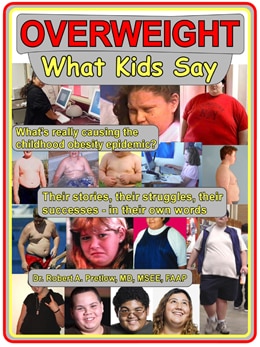
OVERWEIGHT: What Kids Say explores the obesity problem from the often-overlooked perspective of children struggling with being overweight.

About Dr. Robert A. Pretlow

Dr. Robert A. Pretlow is a pediatrician and childhood obesity specialist. He has been researching and spreading awareness on the childhood obesity epidemic in the US for more than a decade.
You can contact Dr. Pretlow at:

Presentations

Dr. Pretlow’s invited presentation at the American Society of Animal Science 2020 Conference
What’s Causing Obesity in Companion Animals and What Can We Do About It

Dr. Pretlow’s invited presentation at the World Obesity Federation 2019 Conference:
Food/Eating Addiction and the Displacement Mechanism

Dr. Pretlow’s Multi-Center Clinical Trial Kick-off Speech 2018:
Obesity: Tackling the Root Cause

Dr. Pretlow’s 2017 Workshop on
Treatment of Obesity Using the Addiction Model

Dr. Pretlow’s invited presentation for
TEC and UNC 2016

Dr. Pretlow’s invited presentation at the 2015 Obesity Summit in London, UK.

Dr. Pretlow’s invited keynote at the 2014 European Childhood Obesity Group Congress in Salzburg, Austria.

Dr. Pretlow’s presentation at the 2013 European Congress on Obesity in Liverpool, UK.

Dr. Pretlow’s presentation at the 2011 International Conference on Childhood Obesity in Lisbon, Portugal.

Dr. Pretlow’s presentation at the 2010 Uniting Against Childhood Obesity Conference in Houston, TX.

Food & Health Resources