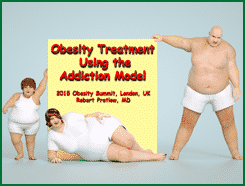
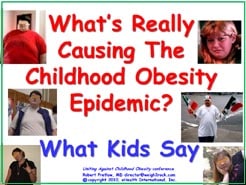
Let’s keep going with Erving Goffman for a while, because that man was incredibly tuned in to issues that are exactly as vital (if not more so!) now as they were six decades ago when “Stigma: Notes on the Management of Spoiled Identity” was published. What an incredible find!
Note these incontestable facts about what has happened since then:
- Science has advanced to an unimaginable extent.
- Academic papers containing millions of words have been published.
- Entire institutions dedicated to this exact issue have been built and staffed, and have established formidable reputations for themselves.
- Billions of dollars have been spent on research and theories and programs and methods and trials and the education of new generations of scientists and doctors.
- Thousands of brilliant professionals have devoted their careers to figuring out how to stop obesity from being such a curse.
And yet, meanwhile, grownups who were not even born yet when Goffman articulated his ideas have spent their entire lives regretting how an extra-large body has impacted their lives. All over the world, countries that did not even use to know the meaning of the word “obesity” are now drowning in tons of it. Entire professions that did not yet exist when Goffman did his work are dedicated to making sure that people all over the planet consume tons of stuff whose intent and purpose is to destroy them. That stuff, incredibly, is unquestioningly accepted as food.
Further, we do not want our current babies and kindergarteners to be the next generation made miserable by obesity… Which they are in serious danger of becoming, because no matter how much science has progressed in the meantime, human nature has not improved by one iota. And we need Erving Goffman today, because the threat of obesity is hanging over our children worse than it has over any previous generation since people were invented.
A wide range of interests
Goffman’s sympathy did not extend only to the obese. He empathized with people stigmatized for other reasons, too. A woman unable to conceive a child, for instance, might be pushed aside and totally disregarded. A person of either sex who was born with a facial deformity might be shunned and avoided throughout life.
Depending on geography, education, religious faith, “political correctness,” and dozens of other variables, there are plenty of circumstances all around the globe right now that cause individuals to be “othered.” They might be shunned, or barely tolerated, or made to feel their difference in a number of ways.
What it all boils down to is that, just like in almost any society that has ever existed, certain individuals are deemed unacceptable. Goffman’s book concentrated on…
[…] the issue of “mixed contacts” — the moments when stigmatized and normal are in the same “social situation,” that is, in one another’s immediate physical presence, whether in a conversation-like encounter or in the mere co-presence of an unfocused gathering. The very anticipation of such contacts can of course lead normals and the stigmatized to arrange life so as to avoid them. Presumably this will have larger consequences for the stigmatized, since more arranging will usually be necessary on their part.
Looking back in history, Victor Hugo’s 1831 novel The Hunchback of Notre Dame is perhaps the prime fictitious example of a character who is “othered” by physical circumstances.
An interesting side note is that in the late 1950s, just before Goffman’s non-fiction work on stigma was published, Lawrence Durrell wrote a series of novels known as the Alexandria Quartet, which caused a sensation in the realm of literary fiction. Two of the characters suffer from facial deformities that strongly influence their personalities and activities.
One is landowner Narouz Hosnani, described as jealous, frustrated, and fanatically religious. Despite his cleft lip and palate (surgically uncorrectable at the time), he is an impressive orator who also enjoys killing wild animals with a whip, and murders a human by forcing a hatpin into his skull.
Another Durrell character is Leila, whose famously beautiful face is “melted” by smallpox. Despite also being a very intelligent woman who speaks several languages, she has no choice but to wear a heavy black veil and live reclusively in a country house with a tame snake as companion.
Even today, many people who have been taught that they are unacceptably different catch on quickly, and do society a favor by self-isolating, to whatever extent is possible. What are the results of such categorization? Goffman wrote,
Lacking the salutary feed-back of daily social intercourse with others, the self-isolate can become suspicious, depressed, hostile, anxious, and bewildered.
Of course, those are not the only negative results. A person who is “othered” may feel insecure, inferior, jealous, disrespected, shunned, deficient, unwanted, undesirable, hopeless, and unfixable.
Your responses and feedback are welcome!
Source: “Stigma: Notes on the Management of Spoiled Identity,” WordPress.com, 1963
Image by jovemVoodo/Pixabay
 FAQs and Media Requests: