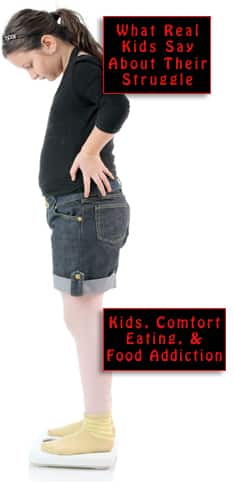
Is the title of this series intended to carry a double meaning? Absolutely! It’s about how, for centuries, bias has been inflicted on and felt by humans who bring out a negative reaction in others. When a person is automatically, perpetually criticized at first sight, it is unlikely to be because they prefer Canadian maple syrup to the sort harvested in the USA, or because they like a piano solo better than a drum solo. Those differences cannot be ascertained by a mere glance.
But obesity can easily be spotted, and anyone who is considered by others to be too physically large is a target waiting to happen. Too many people feel entitled to comment out loud, either to the obese person or to bystanders. Depending on their age, upbringing, and degree of basic humanity, random strangers may feel compelled to voice their disapproval. Even familiar folks, friends and relatives, might be perfectly comfortable dishing out criticism.
In another sense, the title is a reminder that obesity is not a problem that growing older will solve. The opposite, in fact. A 7-year-old child whose body size attracts ridicule and censure is statistically likely to still be in that situation at age 18 and 21 and 35… And possibly even at retirement age and beyond.
Random circumstances and determining factors
Naturally, all these numbers are dependent on variables, like the person’s genetics and gender; their position in society, and particularly in the economic spectrum; the degree of obesity they start out with in childhood; and of course any treatment that might have been attempted or successfully completed.
It goes without saying that statistics will differ according to year and location, but it is probably fair to say that there is a 50% to 70% likelihood that the obese child will still be obese at 18… And a slightly higher chance that they will still be obese at age 25.
And what about the remainder of adulthood? Will an obese child still be that way on her or his deathbed? There are too many variables to really say anything solid about that likelihood. Just to complicate matters, someone might lose weight in later years for causes unconnected to their earlier excess of it; and some of the reasons are not good: aging, starvation, illness, a wasting disease, or treatment for a medical condition.
This needs to be kept in mind
Still, in general, the longer the state of childhood obesity endures, the more likely the individual is to continue into adulthood as an obese person. The longer the condition is allowed to persist, the more difficult it is to shake off, and the less likely a return to non-obesity will become.
Overall, the general prognosis does not look good. Of course, we are now raising a whole generation of young people whose fate will be determined by the absence or presence of the radical weight-loss drugs that even many children now have access to, and it will take many years, and a whole lot of science, to discover how that turns out.
The same doubts can be expressed about the adults who are currently involved with the revolutionary drugs. As of yet, there is no way to know what sort of shape a 30-year-old will be in 20 years from now, although a number of possibilities are of course on the table. Can the meds, like the training wheels of a bicycle, be left behind? Or is the patient, determined not to return to obesity, destined to a lifetime of these medications as surely as someone with diabetes is tied to insulin forever?
Call to action
The general point here is, any grownup responsible for a child or children really needs to be aware that childhood obesity is unlikely to “just go away.” The particular point is, don’t doom your kids to a lifetime of being the butt of other people’s jokes. We can’t all bequeath to our children a trust fund or a townhouse, or even a secondhand car. In the wake of certain tragedies, some caregivers can’t even hand down the simpler things like an album of family photos or grandma’s engagement ring.
But we can all take an active interest in figuring out the very best way, in our own unique case, to help our own particular children avoid lifelong obesity. If your circle happens to include a child who could benefit from such an advantage, here is one starting point: Check out BrainWeighve.
Your responses and feedback are welcome!
Source: “Predicting obesity in young adulthood from childhood and parental obesity,” NIH.gov, 09/25/97
Image by Brainweighve
 FAQs and Media Requests: