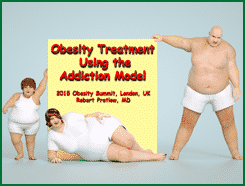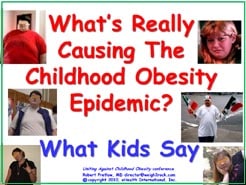
The posts in this sequence explore some of the dark corners of obesity-related attitudes, because parents of children who seem to be headed in that direction might benefit from awareness about the future possibilities. The intention here is not to frighten anyone into locking the potentially obese child into a closet where a few hundred calories per day can be passed through a slit in the door.
However, evidence exists in every corner and on every level of society that the life of a morbidly obese individual is not ideal. Of course, no parent is advised to make a child’s existence miserable in order to avoid obesity. On the other hand, no parent is advised to ignore a potential situation in the hope that it will just go away.
It has long been accepted that to attach “phobia” to a word does not exactly connote fear of the thing. “Homophobia,” for instance, is understood to signify an emotion closer to hatred, but it sounds more acceptable in polite society.
In a nightclub
This sentence in a Psychology Today article was written by Seth Meyers, Psy.D., about a live standup comedy performance where an obese comedian told a stupid joke that would not have been funny, or even interesting, no matter who might have said it. About the audience, Dr. Meyers observed,
They laughed because they hate fat people, and worse, because they believe fat people deserve such spite.
But then, the mental health professional pulled a switcheroo and went on to explain how that was not true at all, and actually, a totally different dynamic was in play. Here is what really happens when haters display their obnoxious behavior:
They’re taking a mental break — almost like releasing a valve with too much pressure — from judging themselves.
In this situation, the performer on stage has volunteered for a role that should have become obsolete centuries ago, and it’s not a court jester. In the olden days, anyone who mattered was forced to live in or near the royal palace, where the monarch could keep an eye on them, and also to make sure that the ruler could be seen to administer justice. But if the crown prince misbehaved, his sacred person could not be violated, so there was a staff member called the whipping boy, who would be punished instead, in the hope that the prince would feel bad and learn how to behave properly.
In modern times
So, what a professionally obese person does is fill the role of whipping boy, absorbing the scorn that members of the general public (in this case, audience members) secretly feel they themselves actually deserve. And at least the stage professional volunteered for the job. But the lady next to you in the airplane didn’t ask to be your whipping boy. She gets the job anyway, as you spend on her that disgust you actually feel for your own 30 extra pounds.
Meyers observes that “there appears to be limitless self-judgment out there in the universe,” which is reflected in the amount of judgment that the ordinary citizen is prepared to dish out, especially on obese people, who are pathetically easy targets. The random observer in the grocery store aisle will not be equipped with enough knowledge to judge you for eating your own hair, but will certainly be able to guess that you eat too many doughnuts.
And, parents: The world is full of sad, mad, self-hating people who can’t wait to judge, dislike, and embarrass your child, in the unconscious and very mistaken belief that pouring out scorn on somebody else will make them feel better, and heal their pain-filled lives.
Here is another thing: While helping our own child to grow up undamaged, we probably don’t particularly want to damage anybody else along the way, or contribute to the unhappiness of somebody we don’t even know. Also, Dr. Meyers suggests a way to help make the world a kinder, more understanding place by taking the Empathy Test.
Your responses and feedback are welcome!
Source: “The Psychology of Why People Dislike or Hate Fat People,” PsychologyToday.com, 05/06/11
Image by FreeFunArt/Pixabay
 FAQs and Media Requests: