Who amongst us has not wished for a top-notch resource containing almost 200 podcast episodes, along with transcripts of those broadcasts? Obviously, we are talking about the University of Oxford’s interdisciplinary research unit that endeavors to decode “the complex and interwoven causes of obesity in populations across the world.”
With each individual work available as either a podcast or a transcript, the Unit for Biocultural Variation and Obesity (UBVO) is a spectacular collection of information compiled by some of the smartest scholars on the planet. For proof of that assertion, let’s look at the work of Zofia Boni, titled “Fatness and the Body,” which is concerned specifically with childhood obesity as viewed through the lenses of both biomedical research and social constructivism.
Although Boni did not set out to specifically study obesity, her work experience and academic studies have included “anthropology, food, anthropology of childhood, as well as socialist studies and feminist scholarship,” while current and future work includes such diverse fields as “social anthropology, quantitative sociology, epidemiology, climate science, demography and physics.”
Among the questions for which she seeks answers are:
Where or what is the difference between obesity and fatness, and who has the right to decide that, and also why is that important?
How and why has obesity changed in the way in which is it constructed as a public problem?
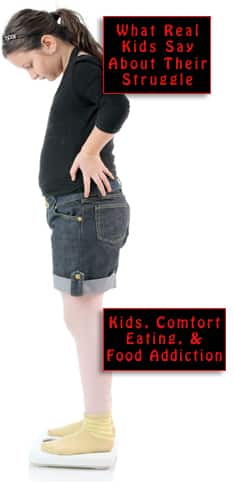
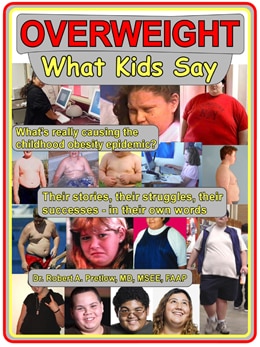
How do different actors, especially children, experience childhood obesity?
The scholar has interviewed a slew of professionals who work with children in the areas of overweight and obesity, including “psychologists, nutritionists, dietitians, medical doctors, physical activity experts, and more.” In the field work aspect of her investigations, with children and their parents, she was often made acutely, even painfully, aware of the many ramifications and connotations of these studies.
Every answer brought forth more questions. Is obesity a disease or a condition that causes other diseases? Should childhood obesity be defined and treated as a public health crisis? As an epidemic?
Awkward questions
One aspect that appears problematic is the continuing use of BMI measurements on children, “sort of assuming that obesity is only about excessive weight and always about excessive weight.” And an ongoing question is exactly what the distinction is, or should be, between overweight and obesity.
Even worse is to drag morality into the equation, causing an individual biomedical problem to become a “social, socially constructed form of biomedical oppression.” Enough oppression already exists in the form of “wider social processes, such as inequalities in education and employment opportunities, and environmental exposure to pathogens and pollution…”
Fatness and obesity are often treated as two names for the same phenomenon, but is that a basic error that impedes progress in the field? There is also something distasteful about the widespread assumption that childhood obesity is chiefly caused by mothers and expected to be dealt with mainly by mothers.
How and why did flab make the shift from being pretty much a personal problem, all the way to becoming a matter of public concern? How can it be prevented and/or treated without bringing harmful stigmatization into the picture? How do actual people, especially children, experience not only obesity, but the role of public enemy into which it seems that factions of society often try to cast them?
Your responses and feedback are welcome!
Source: “Unit for Biocultural Variation and Obesity (UBVO) seminars,” OX.ac.uk, undated
Source: “Series name: Unit for Biocultural Variation and Obesity (UBVO) seminars,”
Podcasts.ox.ac.uk, undated
Image by Kyrnos/Pixabay
 FAQs and Media Requests: