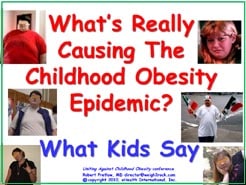
Here is a fact about the great majority of news items that fall under the heading of dangers associated with obesity. By strange coincidence, they also belong in the category of obesity costs. For example, a story last fall was headlined, “Obese Children Face Nearly 5-Fold Higher Risk of Fractures, Study Finds.”
Nobody wants to see children suffer fractures, and everyone knows that the repair of broken bones must be paid for somehow. In the journal Scientific Reports, orthopedic surgeons published an article explaining that childhood obesity will influence the details and nuances of fracture patterns not only in specific cases, but also in relation to the overall risk of injury.
The study subjects included almost 18,000 hospitalized children classified as obese, and for comparison purposes, more than 3,000 healthy children. It comes as no surprise that, among these hefty young patients, leg fractures occur much more frequently than other kinds. But broken arms, as well as fractures in the torso and spine, happen very often, too. The least likely bone damage-causing incident for an obese child would be a head injury.
The overweight children tend to have dyslipidemia, which might be caused by heredity, lifestyle, or a combination of the two factors. Among other effects, it causes elevated cholesterol and triglyceride levels. Then, the news gets worse, because as it turns out, even the pre-born are also at risk. The researchers concluded that…
Proactive weight management and careful clinical assessment could play a vital role in safeguarding children’s musculoskeletal health.
Speaking of births…
Over the years, it has become more and more obvious that Cesarean sections lead to obesity, and vice versa. Once a pregnant obese patient’s weight is known, the medical profession is able to predict with startling accuracy the percentage of likelihood that a C-section will be needed. According to Dr. Melissa Riegel, of the Society for Maternal-Fetal Medicine,
Failed induction of labor (IOL) is a leading indicator for cesarean delivery, and cesarean delivery is 80% more likely in patients with obesity undergoing IOL, than in normal-weight patients.
About these cases, many more details are available, but what it all boils down to is that obese mothers and their infants face unfavorable odds for a trauma-free birth experience, and the phrase “maternal morbidity and mortality” is frequently used. Dr. Riegel summed up the situation for a journalist by saying,
There is a role for translational work to investigate the specific biological changes in patients with obesity that might contribute to an increased risk of cesarean delivery and there is also a role for investigating the effectiveness of different labor induction interventions specifically in patients with obesity.
It is also very obvious that pregnant obese women need “clear counseling” (at the very least), but it is equally evident that, by the time an egg has been fertilized, the opportunity for meaningful behavioral change has pretty much passed. It also goes without saying that every stage and aspect of the pregnancy will rack up bills more substantial than those issued to mothers whose weight is in the healthy range.
Your responses and feedback are welcome!
Source: “Obese Children Face Nearly 5-Fold Higher Risk of Fractures, Study Finds,” MedicalDialogues.in, 08/21/25
Source: “Dyslipidemia,” MerckManuals.com, July 2025
Source: “High Cesarean Rates Persist in Obesity Despite Standardized Protocols,” SMFM.org, 03/15/24
Image by taynaraakemi/Pixabay
 FAQs and Media Requests: